


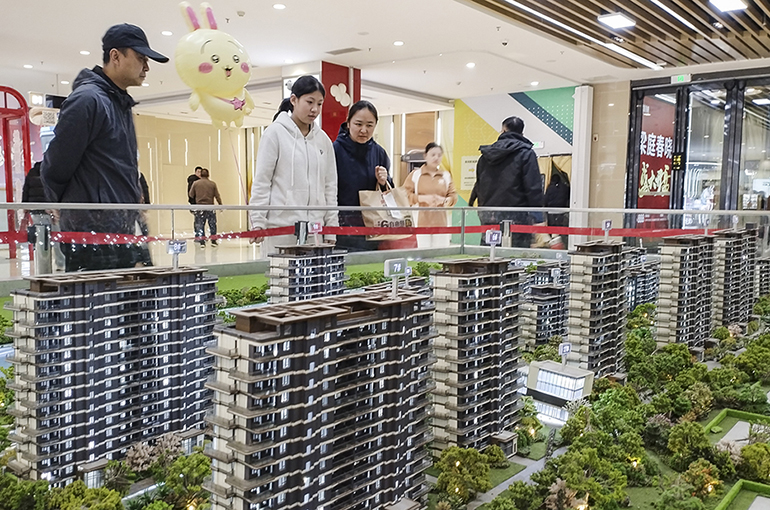
Chinese housing markets experienced significant growth during the recent Chinese New Year holiday period, with major cities reporting substantial increases in property transactions. The nine-day Lunar New Year holiday, which ended on February 23, saw new home sales surge in multiple metropolitan areas, driven by government stimulus measures and promotional incentives from real estate developers. The uptick in housing market activity marks a notable shift after an extended period of challenges in China’s real estate sector.
According to data from Shanghai Centaline Property Agency, the floor area of new houses sold in Shanghai surged 193 percent to 4,844 square meters during the holiday period compared to the previous year. The figures also exceeded sales levels recorded during both 2024 and 2023, indicating strong momentum in one of China’s most important property markets.
Government Policies and Developer Incentives Drive Housing Market Recovery
Industry insiders attribute the surge in housing market activity to a combination of supportive government policies and purchase incentives offered by developers during the holiday. These measures directly reduced the cost of acquiring new homes, encouraging potential buyers to take advantage of favorable conditions. Real estate professionals reported that customers actively sought to capitalize on the limited-time opportunities presented during the holiday period.
Additionally, Shenzhen experienced a notable increase in property viewing activity. Monitoring data from real estate brokerage Shenzhen Leyoujia revealed that home viewing appointments jumped significantly in the two days following the holiday. New house viewings surged over 45 percent year-over-year, while second-hand home viewings soared approximately 60 percent.
Buyer Concerns and Decision-Making Patterns
Despite increased activity, many potential home buyers remain cautious according to market insiders. Primary concerns include whether property prices will continue declining, whether under-construction properties can be delivered on schedule with assured quality, and critically, whether new properties can retain their value over time.
However, those who did commit to purchases moved more quickly than usual. The person in charge of the Poly Tianyi project in Guangzhou reported that most clients required less than 10 days from initial viewing to making deposits during the Chinese New Year holiday, significantly shorter than the typical one-month decision-making period.
Regional Variations in Property Demand
Meanwhile, labor-exporting cities demonstrated considerable demand from migrant workers returning home for the holiday. Cities including Fuyang in Anhui province, Nantong in Jiangsu province, and Handan in Hebei province saw new home reservations surge between 10 percent and 20 percent during the nine-day break compared to the same period a month earlier, according to a developer insider in East China.
In contrast, demand patterns varied significantly across different metropolitan areas. The number of reservations in Suzhou, Zhengzhou, and Shenyang dropped around 20 percent to 30 percent year-over-year, while Hangzhou and Hefei maintained stable levels, the insider noted.
Factors Contributing to Increased Purchases
Li Yujia, chief researcher at Guangdong Housing Policy Research Center, explained that increased home purchases by migrant workers stemmed partly from the longer holiday duration and higher numbers of people returning to their hometowns compared to last year. Furthermore, many returnees planned to pursue secondary employment or establish businesses in their home regions, contributing to sustained property interest.
Li also noted that stabilizing house prices in some third- and fourth-tier cities played a role in the demand recovery. The cessation of price declines in these markets provided greater confidence to potential buyers who had previously adopted a wait-and-see approach.
Market observers will continue monitoring whether the holiday period surge represents sustainable momentum or a temporary spike driven by seasonal factors and time-limited incentives. The trajectory of government support policies and developer strategies in coming months will likely determine the durability of this housing market recovery.