


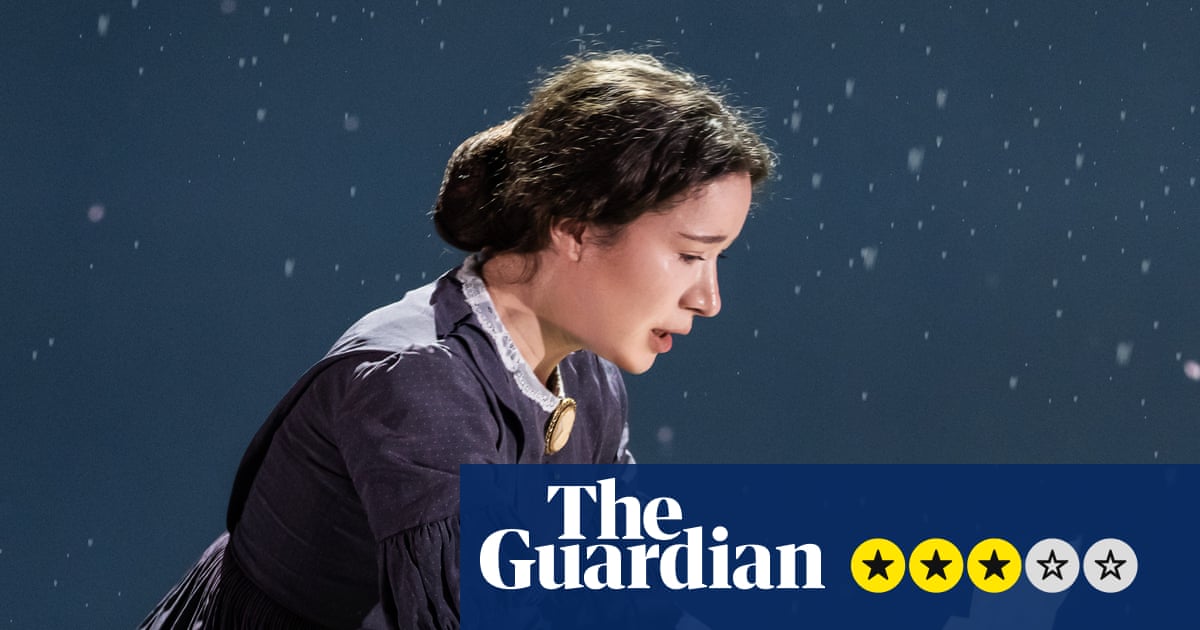
A new theatrical production examining the early life of acclaimed novelist George Eliot has opened at Hampstead Theatre in London. The play, titled Bird Grove and written by Alexi Kaye Campbell, focuses on the formative years of Mary Ann Evans before she became George Eliot, exploring her ideological conflicts with her father in 1840s Coventry. Directed by Anna Ledwich, the production stars Elizabeth Dulau as the young Evans and Owen Teale as her father Robert.
The narrative centers on Evans’s decision to stop attending church with her father due to her rejection of conventional biblical interpretations. According to the production, this declaration leads to her banishment from the family home, Bird Grove, setting up a dramatic confrontation between father and daughter that forms the emotional core of the play.
George Eliot Theatre Production Blends History with Drama
Campbell’s script portrays Evans in her twenties, years before she would scandalise Victorian society by cohabiting with a married man and writing celebrated novels under a male pseudonym. The playwright depicts the seeds of Evans’s later unconventionality through her growing feminist consciousness and rejection of religious dogma. The production includes supporting characters such as the free-thinking couple Charles and Cara Bray, played by Tom Espiner and Rebecca Scroggs, who befriend the young Evans.
However, the play takes certain liberties with historical facts. George Eliot was never actually expelled from her father’s home, though he did disapprove of her questioning of Christian doctrine. Additionally, the inheritance subplot suggesting Robert Evans deliberately shortchanged his daughter deviates from reality, as the unequal distribution reflected Victorian convention rather than paternal revenge.
Theatrical Design and Performance
Sarah Beaton’s set design features a pale blue Georgian household with wall-less rooms that revolve between scenes, mixing naturalistic drawing-room drama with abstract elements. The production incorporates an unusual theatrical device wherein Dorothea Brooke, the fictional protagonist from Eliot’s Middlemarch, appears briefly to inspire her creator. This meta-theatrical moment blurs the boundaries between reality and imagination.
Critical response has highlighted the production’s emotional subtlety and strong central performance by Dulau. The early scenes incorporate humor alongside serious drama, particularly through the character of Horace Garfield, a Dickensian suitor seeking a marriage of convenience with Evans to claim his inheritance. Meanwhile, Owen Teale delivers a nuanced portrayal of Robert Evans, creating tender family scenes characterized by understatement.
Exploring Victorian Women’s Rights Through Biography
The George Eliot biographical play functions as both a period drama and an exploration of feminist awakening. Campbell includes drawing-room discussions on Christianity and conversations articulating Evans’s developing awareness of women’s limited opportunities in Victorian England. The script explicitly addresses gender inequality through dialogue such as Evans’s observation about wresting the pen from male writers.
Additionally, the production examines class mobility and social respectability through Robert Evans’s desperate attempts to secure a proper marriage for his daughter. This context illuminates the constraints facing even privileged Victorian women and the courage required for Evans’s eventual unconventional choices. In contrast to the minor supporting characters who serve primarily as plot facilitators, the father-daughter relationship receives substantial dramatic development.
The play’s emotional impact builds gradually through understatement rather than melodrama, according to reviewers. The revolving set design supports this approach by creating fluid transitions between public and private spaces within the Evans household. Furthermore, the brief appearance of Dorothea Brooke provides a poignant glimpse of Evans’s literary future without disrupting the historical narrative.
Bird Grove continues its run at Hampstead Theatre, though specific closing dates have not been confirmed. The production represents part of ongoing theatrical interest in reclaiming stories of pioneering Victorian women writers and their struggles against social convention.