


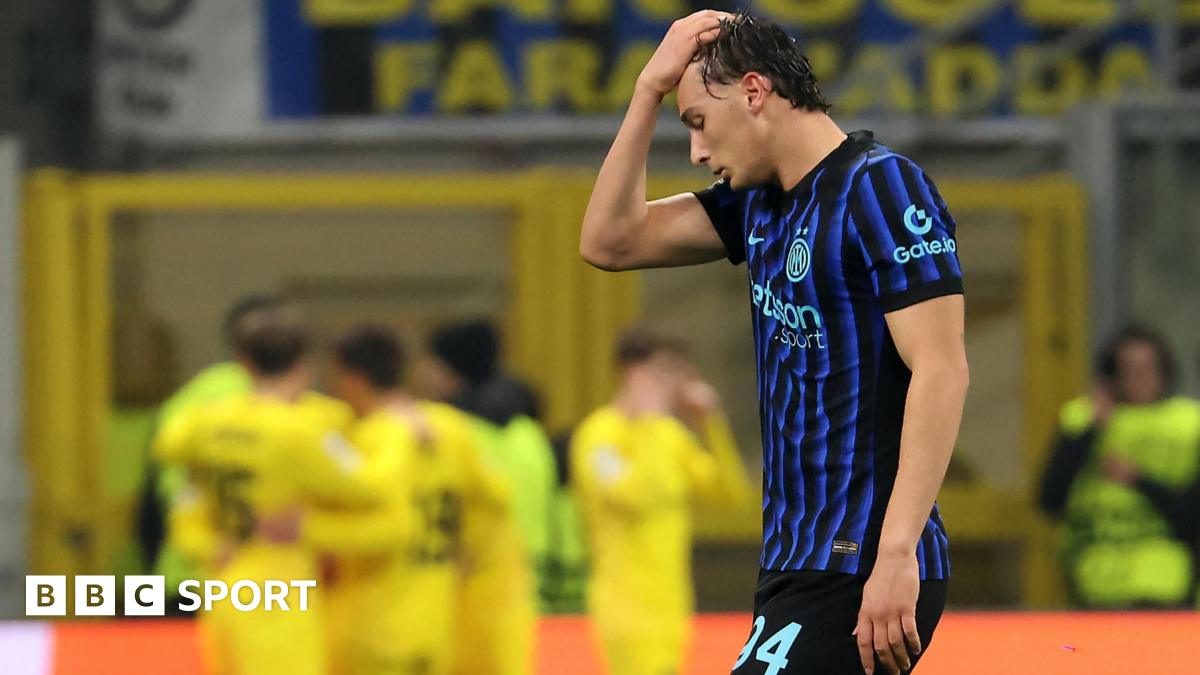
Italian football is facing a crisis of confidence after all three Serie A clubs were eliminated from the Champions League playoff round, marking a historic low point for the country’s top-tier football. Inter Milan, Juventus, and Atalanta all crashed out of European competition despite strong performances in the league phase, raising serious questions about the competitiveness of Italian football on the continental stage.
The Serie A Champions League struggles culminated with Inter’s elimination despite dominating domestically with a 10-point lead over AC Milan. According to journalist Vincenzo Credendino, this represents “one of the worst pieces” of Italian football history. All three Italian sides lost to opponents who finished lower in the Champions League table but demonstrated more intense playing styles.
The Decline of Serie A’s European Dominance
The contrast with Italian football’s glorious past could not be starker. Inter signed Ronaldo and Vieri for world-record fees in the late 1990s when Serie A attracted the game’s most talented stars. AC Milan won the Champions League in 2003 and 2007, while Jose Mourinho’s Inter became the last Italian side to lift the trophy in 2010.
However, no Italian club has won the Champions League in 15 years. While Atalanta secured the Europa League in 2024 and Roma won the Conference League in 2021, these victories in secondary competitions highlight the gap between Serie A and Europe’s elite.
Structural Problems and Slow Playing Style
European football expert Julien Laurens described the situation as “terrible for Italian football at the moment” on BBC Radio 5 Live. The elimination is particularly concerning given that Inter, Juventus, and Atalanta finished 10th, 13th, and 15th respectively in the league phase, positions that should have secured progression.
According to journalist Verri, the problem is structural rather than temporary. Italian football plays at a significantly slower pace compared to other top European leagues, which becomes a critical disadvantage in knockout competition. Former Leicester City manager Claudio Ranieri reportedly told Verri that English teams maintain higher training intensity that translates directly to match performance.
Additionally, the national team’s struggles mirror the club crisis. Italy must win a playoff in March to avoid missing a third consecutive World Cup, having last won the tournament in 2006. This double crisis at club and international level suggests deep-rooted issues within Italian football’s development and tactical approach.
Long-Term Concerns for Italian Football’s Future
Credendino emphasized that Italian football needs to consider not just the next one or two years, but the next 10 to 15 years. Meanwhile, the gap between Serie A and top European leagues continues to widen despite Italian clubs’ domestic dominance. Napoli, the defending Serie A champions, failed even to progress from the Champions League league phase.
In contrast to the high-intensity football practiced in the Premier League, Bundesliga, and La Liga, Italian clubs struggle to match the tempo required for European success. The tactical conservatism and slower pace that characterizes Serie A has become a liability rather than an asset in modern European competition.
The future of Italian football remains uncertain as clubs and governing bodies must decide whether to fundamentally alter their approach to training, tactics, and player development. Without significant structural changes addressing the intensity and pace of Italian football, the country’s clubs may continue struggling to compete at the highest European level for years to come.