


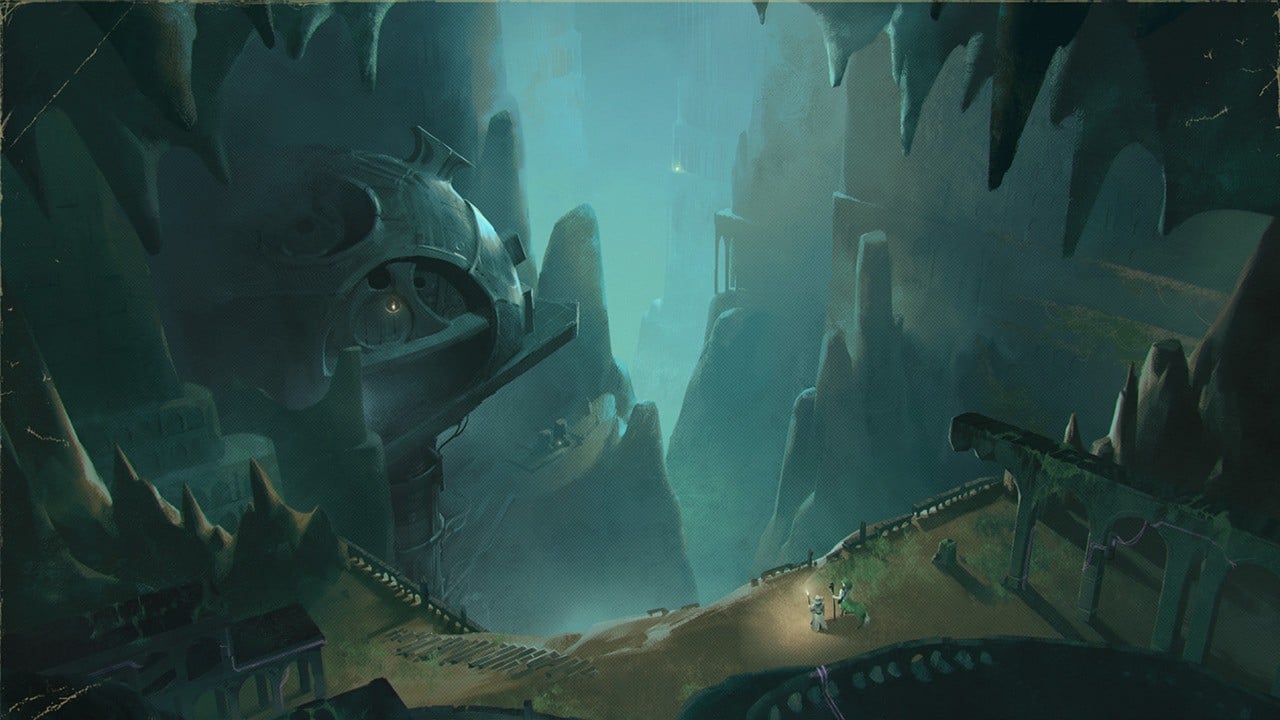
Caves of Qud, the cult classic roguelike RPG that spent 17 years in development, has officially launched on Nintendo Switch following its version 1.0 release in 2024. Developed by American studio Freehold Games, the post-apocalyptic science-fantasy adventure brings its notoriously complex systems and permadeath mechanics to console players for the first time. The Switch port maintains the game’s distinctive retro-inspired visual style while introducing controller-based gameplay to navigate its procedurally generated world.
Set in the fictional land of Qud, the game challenges players to survive in an open world populated by warring factions, dangerous creatures, and a mix of mystical and technological elements. According to the developers, each new run recalculates the decisions that shape the entire scenario, creating unique narratives with every playthrough.
Caves of Qud Offers Deep Character Customization
Players begin their journey by choosing between two distinct genotypes: mutated humans with biological abilities like beaks or slime glands, or true kin enhanced by cybernetics including night vision and dermal insulation. These character options provide dramatically different gameplay experiences, with mutants starting vulnerable but growing powerful through leveling, while true kin begin strong but become increasingly reliant on technology.
The game’s visual presentation initially appears simplistic, featuring pixelated rectangular tiles reminiscent of classic ASCII graphics. However, the efficient art style quickly comes alive through animation and context, supported by sweeping musical scores and ambient sound design. The scenario has reportedly won Hugo Award recognition for its writing quality.
Roguelike Mechanics Meet Authored Narrative
True to its roguelike roots, Caves of Qud features permanent death with no save points or meta-progression systems. When a character dies, players must restart from the beginning, making survival a constant challenge. Additionally, the game includes an achievement simply titled “Welcome to Qud” that players earn by dying for the first time, establishing the brutal difficulty from the outset.
Meanwhile, the game balances procedural generation with handcrafted content. The basic world map topography remains consistent across runs, allowing players to feel genuine progress as they explore familiar territories with new characters. Furthermore, an entirely authored quest line guides players through caves, markets, and townships while hunting artifacts and completing rescue missions.
However, the combination of permadeath and authored quests creates tension within the game design. Losing hours of progress on a story-focused run proves more frustrating than abandoning a casual survival attempt. According to player experiences, a significant difficulty spike occurs just as adventurers feel they have mastered the early game, creating what some consider an unfair challenge that forces repeated attempts.
Multiple Play Modes Address Difficulty Concerns
To accommodate different player preferences, Caves of Qud offers three gameplay modes beyond the standard “Classic” permadeath experience. The “RPG” mode allows saving at settlements, though these safe havens appear infrequently during quests. In contrast, “Wander” mode reduces creature aggression and awards experience through exploration rather than combat, providing a more relaxed approach to experiencing the world.
The deep systems create opportunities for emergent gameplay, including creative solutions like melting through walls or unexpected interactions with objects and creatures. These fan-favorite edge cases typically emerge only when players desperately struggle to keep difficult runs alive, according to community reports.
Technical Considerations for Switch Players
The transition to Nintendo Switch presents some interface challenges inherited from the game’s PC origins. Text size can be increased only by reducing the visible play area, requiring players to find a comfortable balance. The developers recommend playing on larger screens, whether through handheld devices with bigger displays, television setups, or monitor configurations for optimal visibility.
The control scheme utilizes the ZR button for passing turns and main interactions, creating a satisfying gameplay loop. Nevertheless, the extensive behind-the-scenes calculations occasionally result in minor load times and sluggish turn transitions as the game prepares for player actions.
Freehold Games has not announced specific plans for post-launch updates or additional content for the Switch version. The studio’s focus remains on supporting the game across all platforms following its extended development period and recent full release.