



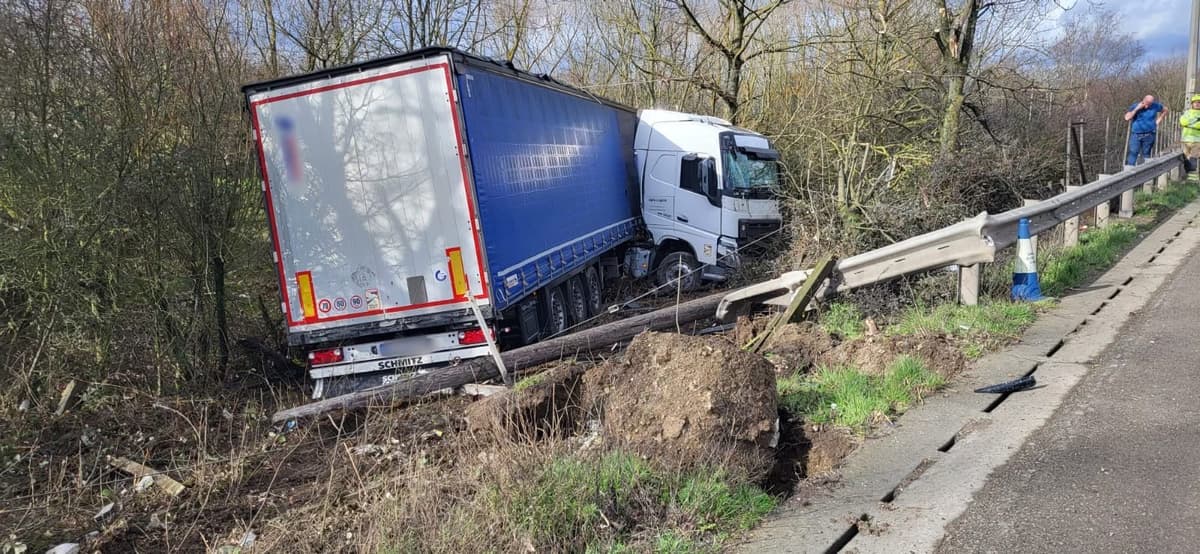
A serious lorry crash on the M25 motorway has caused extensive traffic disruption after bringing down overhead power cables, forcing authorities to shut both carriageways near the Essex border. The M25 lorry crash occurred early in the day, prompting an emergency response from fire services and highways teams who worked to secure the scene and assess damage to critical infrastructure.
According to Essex Fire and Rescue Service, emergency crews were dispatched to the collision site where a heavy goods vehicle struck overhead cables. The impact brought down power lines across the motorway, creating a hazardous situation that required both directions of Britain’s busiest orbital route to be closed to traffic.
Emergency Response to M25 Lorry Crash
Fire service personnel worked alongside National Highways officials to manage the incident and ensure public safety. The damaged lorry remained at the scene while specialists assessed the extent of cable damage and planned recovery operations. Authorities have not confirmed the exact cause of the collision or whether any injuries occurred.
However, the closure has sparked significant traffic chaos across the region as thousands of motorists face lengthy delays and diversions. The M25 serves as a critical artery for commercial and commuter traffic around London, and any closure typically results in gridlock on alternative routes.
Power Infrastructure Damage Complicates Recovery
The downed power cables have added complexity to recovery efforts, according to reports from the scene. Utility companies were called to the location to isolate electrical systems before recovery vehicles could safely approach the damaged lorry. This additional safety requirement has extended the anticipated closure time beyond typical accident scenarios.
Meanwhile, National Highways issued traffic alerts urging drivers to avoid the area and seek alternative routes. The report indicates that congestion spread to nearby A-roads as displaced motorway traffic sought detours around the closure zone.
Impact on Regional Traffic Patterns
Additionally, the incident has affected multiple junctions along the M25, with traffic backing up for several miles in both directions before the closure point. Pictures from the scene show the damaged lorry with visible impact damage and cables strewn across the carriageway, illustrating the scale of the collision.
In contrast to minor accidents that can be cleared within hours, incidents involving damaged infrastructure typically require extended closure periods. The presence of downed power lines necessitates coordination between multiple agencies including highways authorities, utility companies, and emergency services before the road can safely reopen.
Ongoing Closure and Diversion Routes
Part of the M25 remained shut hours after the initial crash as specialist teams continued their work. The London Evening Standard reported that motorists faced significant delays, with some drivers reporting journey times extended by several hours due to the closure and resulting congestion on diversion routes.
The Independent noted that the M25 lorry crash highlights the vulnerability of motorway infrastructure to heavy vehicle collisions. Power cables suspended over busy highways represent essential infrastructure but can create additional hazards when struck by tall vehicles.
According to traffic monitoring services, the closure affected both clockwise and anticlockwise traffic flows. Local roads in the surrounding area also experienced unusually heavy volumes as navigation systems directed drivers onto alternative routes not designed to handle motorway-level traffic.
Authorities have not yet announced a specific timeline for full reopening of the affected M25 sections. Recovery operations will need to be completed and power infrastructure repaired before normal traffic flow can resume, with the duration dependent on the extent of cable damage and repair requirements.